
Pollinator Garden and Monarch Waystation Coming to the Collingwood Common Roof
Thanks to a $6,000 grant from TD Friends of the Environment Foundation (TD FEF) a new native pollinator garden and Monarch Waystation will be built at the entrance of the Collingwood Common Roof and Rotary Hub (CCRRH). The garden project, called A Home for Our Hardworking Pollinators, will add planters with native plant species that support pollinators, like native sweat bees and hummingbirds.
“We’re thrilled to expand the Home for Our Hardworking Pollinators project to our Collingwood location,” says James Thomson, President and CEO of The Common Roof. “This initiative provides a meaningful opportunity to bring our community together while creating a vibrant, supportive ecosystem for pollinators at our community hub. We are grateful for TD FEF for their generous support, which helps us strengthen both our community and local biodiversity here in Collingwood.”
Need your high-school volunteer hours? We're always looking for volunteers who can help support our garden through weeding and general maintenance. Reach out to: communication@thecommonroof.ca to get involved.
Native Plants Spotted at the
Barrie Common Roof
This is the second year of the Home for Our Hardworking Pollinators native plant garden at the BCR and we are so excited to see what's coming up! Check in often as we share more about the plants and the pollinators they support.
Need your high-school volunteer hours? We're always looking for volunteers who can help support our garden through weeding and general maintenance. Reach out to: communication@thecommonroof.ca to get involved.


Prairie Smoke (Geum triflorum) is a spring flower that has incredibly unique seed plumes after pollination. We encourage you to do a quick online search - you'll be amazed!
There are quite a few sprinkled throughout our garden. They are small now, but will get bigger and more showy soon!
This whimsical plant is buzz-pollinated, meaning that it needs the vibration of bee wings to loosen pollen.

Lanceleaf Coreopsis (Coreopsis lanceolata) is a spring/early summer bloomer which attracts a wide range of pollinators including native bees, butterflies, moths, skippers and beetles. It is a hardy, self-seeder and needs to be divided after a few growing seasons to stay healthy and blooming.
%20at%20the%20Barrie%20Common%20Roof.jpg)
Black-Eyed Susan (Rudbeckia hirta) is a low maintenance and self-seeding native flower that usually blooms at the end of summer and early fall - we're lucky to have ours early! After the flowers seed, they become food for birds.
These plants produce an abundance of nectar and are pollinator magnets, attracting bees, butterflies and moths.
%20at%20the%20Barrie%20Common%20Roof.jpg)
Hairy Beardtongue (Penstemon hirsutus). Don't let its quirky name fool you, this native plant has delicate lavender-pink blooms with a "hairy" stem and tongue in its tubular flowers. It is very hardy - tolerating drought and other challenging growing conditions. Penstemon hirsutus attracts hummingbirds, butterflies and native bees and is the butterfly larvae host plant for the Baltimore Checkerspot Butterfly as well as the Chalcedony Midget, and Verbena Bud and moths.
%20at%20the%20Barrie%20Common%20Roof.jpg)
Sundrops (Oenothera fruticosa) is a rapidly spreading member of the evening primrose family. It attracts native bees and hummingbirds and its seeds are a food source for song birds.

Purple Coneflower (Echinacea purpurea)
is an easy to grow, hardy plant with beautiful blooms that last all summer long. It is a very attractive for Monarch butterflies and its seeds are eaten by a variety of bird species.

Wild Bergamot (Monarda fistulosa) attracts a variety of large butterflies, bees and Ontario's native hummingbird, the Ruby-Throated Hummingbird. This species of monarda prefers drier soils that the scarlet bee balm, making it a perfect addition to this hot and sunny garden!
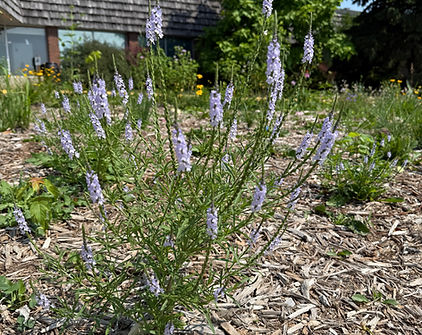
Narrow Leaved Vervain (Verbena simplex) is a lovely, drought tolerant wildflower that attracts various bees and moths and is a host plant for the Common buckeye butterfly.
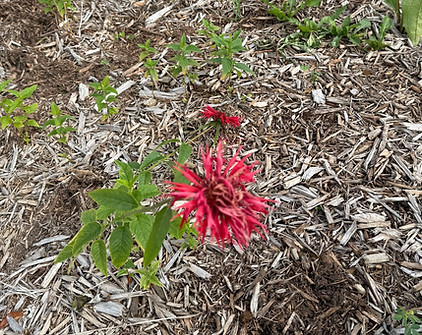
Bee balm (Monarda didyma) has gorgeous red blooms attracting hummingbirds and a large assortment of pollinators. While it prefers moist soil, it is thriving in this sunny garden spot. This monarda species will bloom in July and August and spread via rhizomes to form small colonies.
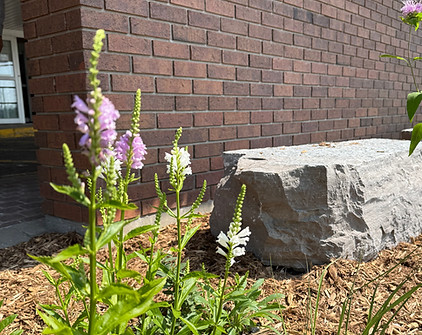
Obedient Plant (Physostegia virginiana) produces a large amount of nectar and is a favourite for pollinators. This plant has beautiful whitish-pink blooms from August to October.

New England Aster (Symphyotrichum novae-angliae) is an incredible eco-system supporter attracting bees and other pollinators as well as being a host plant to over 100 species of butterflies and moths! Not only is it beautiful, but its late blooms support pollinators as they prepare for winter.

Butterfly Milkweed (Asclepias tuberosa) is a drought tolerant and clumping variety of milkweed that is not an agressive spreader, but still a host plant for Monarchs as well as other butterflies and moths. It has upright stems and lovely, bright orange flowers that bloom all summer long (June to August).

Blanket Flower (Gaillardia pulchella) is a long blooming plant (July - September) with cheerful flowers that add colour to any garden. It grows 1-3 feet high and prefers full sun with medium to dry conditions. It is host plant to native moths in the genus Schinia (family Noctuidae) also known as flower moths.

Woodland Sunflower (Helianthus divaricatus) is a native species of sunflower that spreads easily and quickly and thrives in dry conditions. This species flowers from June to September. It's nectar and pollen attracts a wide variety of pollinators and it is also host plant to the Silvery Checkerspot (Chlosyne nycteis) and Gorgone Checkerspot (C. gorgone), and Painted Lady (Vanessa cardui). The seeds are eaten by small birds and squirrels.

Thank you for Joining us!


Thank you to Everyone Who Helped Us Plant a Home for Our Hardworking Pollinators! 🌸🐝 🌼🦋
We are looking forward to the spring when these incredible plants begin to grow and bloom.
We are so grateful to TD Friends of the Environment (TDFEF) for supporting A Home for Our Hardworking Pollinators project at our Barrie Common Roof location! Click to Learn More
Thanks to the financial support of TDFEF, Monarch Landscaping has created an accessible walkway, and added mulch to our space. We are also grateful for the support of Midhurst Landscape Supply for adding mich needed seating and topping up our mulch. We've been able to order plants and have had some generously donated by Pollinate Barrrie and Return of the Native, now we are ready to plant our native pollinator garden and Monarch Waystation at the entrance of our building.
We had such an incredible time at the Barrie Common Roof lunch and learn session with Ashley Hammell from Pollinate Barrie!
Watch for future events as well as the dates for supporting a native garden transformation coming this fall!
Fall 2023: Thank you to everyone who joined us for our community BBQ and pollinator garden preparation!
We had an incredible turnout and can't wait to have you join us next fall (2024) when we plant some native plants to support our hardworking pollinators.